A classic black Amazon gift card picture is not evidence of a physical card. Amazon uses that design in electronic gift-card materials too. Start with the delivery format, then read the denomination and marketplace. Keep the claim code or Apply link hidden in any identification image; no photograph can show whether the value remains.
Plastic, printable paper and email delivery each need a slightly different photo. Amazon's own store shows more than one design, so a single PNG is not a template for every genuine card. Use the references below to name what you hold, then prepare one code-free identification copy and keep the original evidence private.
- Identification copy: the whole object, its amount and its source, with spendable and personal details concealed.
- Private originals: unedited card, delivery and receipt files reserved for official support or the sale route you choose.
Amazon gift card pictures: the classic design is one reference
That distinction matters when a PNG download shows only the logo. Amazon uses the classic version in its eGift materials, so colour and artwork cannot settle whether the value arrived as plastic or through a digital delivery.

Physical presentations add another layer of difference. A card can sit inside a gift box, a sleeve or other packaging, and the colours on the card itself can change with the occasion. These official examples show two distinct packages:
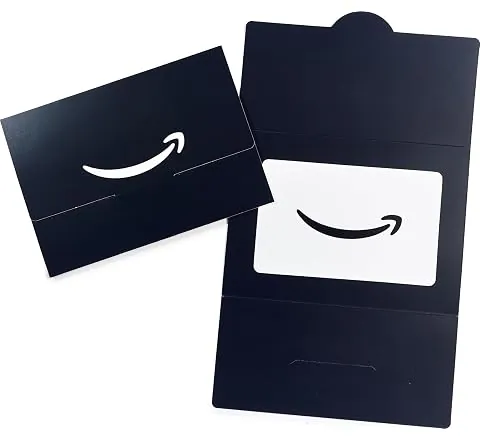
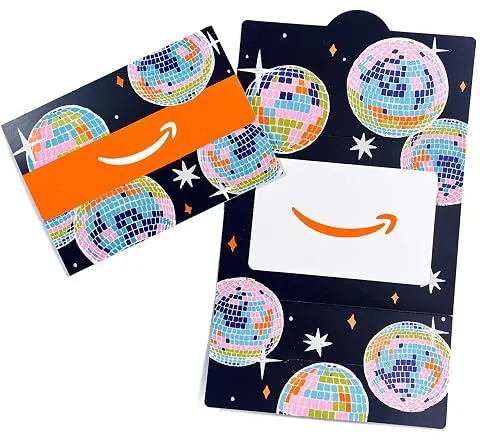
Read the object in front of you. Plastic means a physical presentation; a design inside an email does not. Then look for the denomination and any marketplace wording. A copied image can reproduce familiar artwork, while an unfamiliar occasion design can belong to a genuine card.
Front and back: read the amount, then stop at the covered area
Amazon's redemption guidance places the claim code on the back of a physical card, beneath a peel-off label or the silver area you scratch away. Keep that area covered in an identification photo. It is the spendable part of the card, not a detail a stranger needs for recognition.
The back view can show the printed instructions and marketplace clues. It should not reveal the claim code in a public listing, a group chat or a first message to an unknown buyer. The serial number is a separate support identifier; do not assume it can replace the claim code or prove the balance. Our Amazon redemption guide explains those code roles and the official repair routes.
We could not verify an official back-of-card reference for every Amazon layout, so this guide does not offer one. Follow the wording on your own card, and treat any diagram as a guide to what needs concealment, not as a fixed map of where every identifier sits.
An Amazon e-gift card picture starts with the delivery document
An electronic gift card arrives through digital delivery, so preserve the email or order context around its design. A cropped logo by itself tells you almost nothing. The source, denomination and marketplace identify what the screenshot shows.
Amazon adds a second privacy detail in its redemption guidance: an electronic delivery may present an Apply to your Amazon Account button without a separate claim code. Treat that button and its underlying link with the same care as a printed code. Cover the recipient address, order details and the Apply area in an identification screenshot, and do not click the link to test whether the card still holds value.
A printable card has a different presentation. Amazon sells designs that can be printed and folded into a paper greeting card. It is paper evidence you can hold, not a plastic card with a scratch panel.
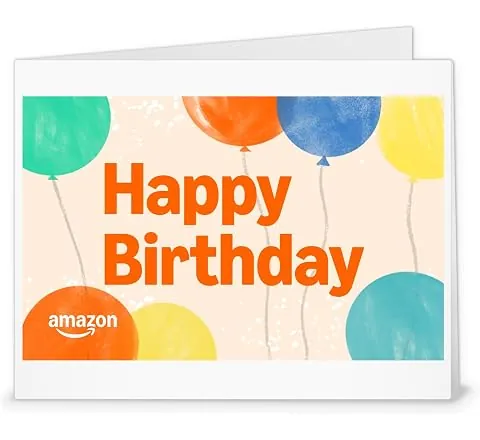
Keep the delivery email or order record even when you print the design. The paper copy shows what the gift looked like, while the delivery record connects that copy to its source. For a retailer-delivered code, preserve the original receipt or message as well.
What an Amazon gift card receipt picture adds
A receipt picture connects the card to a purchase record; it does not report the value left today. Read the retailer, purchase date, card description and any activation reference printed by that seller. Those details should agree with the card and its marketplace.
An identification copy of a receipt usually needs less information than the original. Conceal payment-card digits, billing details, email addresses, loyalty or account identifiers, order numbers that are not needed for identification, and every spendable code. Keep the uncensored original for a genuine support case or the next stage of an agreed sale.
A genuine receipt can still belong to another card. Matching details matter more than the mere presence of a till slip. Our Amazon selling guide explains how purchase evidence fits into the trade; the picture itself never settles the balance.
Build two versions of your Amazon card photo set
Prepare a redacted identification copy for first contact and retain private originals for verification. This separates recognition from value transfer before a chat begins.
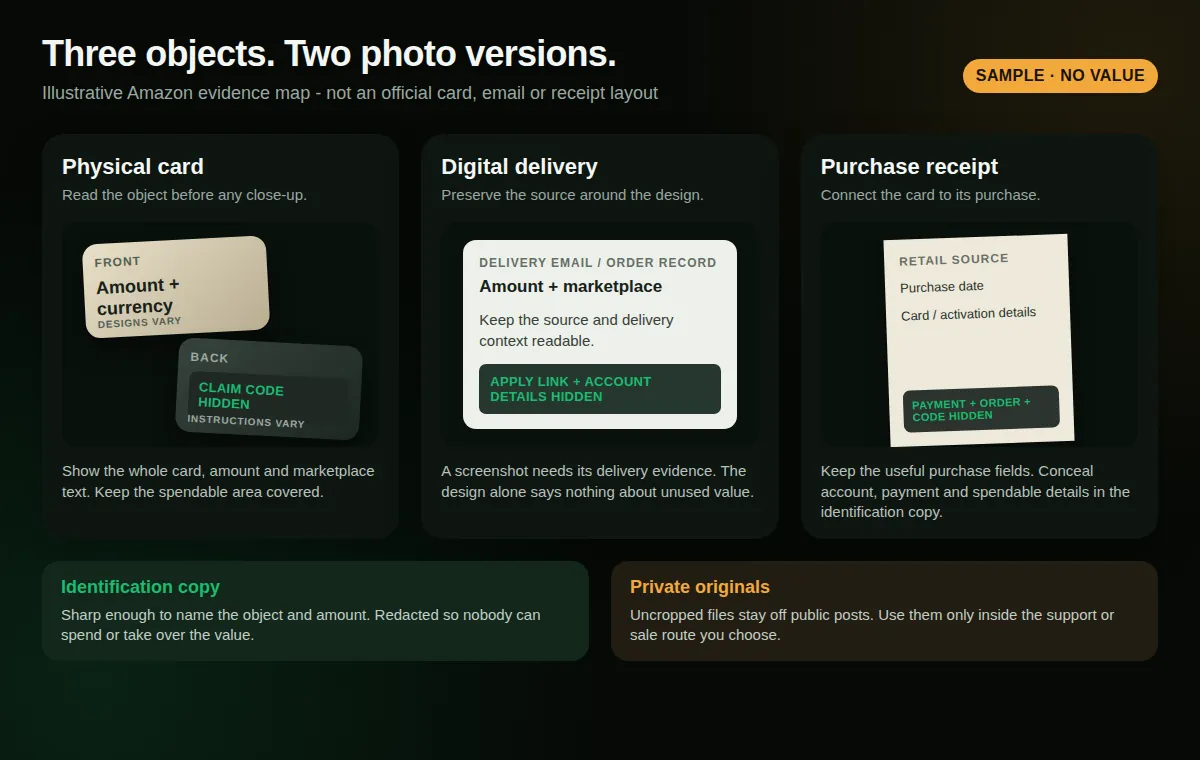
- Photograph the whole object. Put a physical card on a plain, matte surface and include all four corners. Take separate front and back views with the claim area covered. Avoid glare, cropped instructions and a close-up that leaves the amount out.
- Make redacted copies. Cover the claim code, Apply link, serial or order details not needed for identification, and personal information. Leave the amount, card format, marketplace and delivery source readable. Never edit the original evidence.
- Check that the sources agree. The card, delivery document and receipt should describe the same denomination and marketplace. If they conflict or a detail is missing, mark it as unknown instead of guessing from the artwork.
- Keep the originals off public channels. Save full-resolution files somewhere private. Do not attach them to a listing or send them to several prospective buyers. Our seller safety guide covers the verification scripts that turn a photo request into a drained card.
Two folders before you open the chat
Keep the redacted set easy to share and the originals out of sight. Check the Amazon rate table or Amazon calculator for your card's form and amount. In the chat, we write down the naira figure for your approval before the private files enter the trade.
The questions a photo leaves open
Balance, activation, ownership and redemption history all live outside the photograph. Authenticity is just as uncertain: a clean image may be copied, a real card may already be empty, and an intact scratch panel only describes the surface.
Amazon's common-scams guidance warns that criminals may demand the claim code or photographs of the physical card and then disappear. Treat an unexpected request for either as a safety decision, especially when the conversation involves a prize, job, bill or account problem. Identification needs far less information than a scammer asks for.
A safe image describes the object and remains useless to a code thief. Run that test before any version leaves your phone.
Questions, answered
What does an Amazon gift card look like?
There is no single Amazon card appearance. The store shows classic logo designs, physical cards in different packaging and printable paper designs. Identify the format, denomination, marketplace and delivery evidence instead of relying on one familiar image.
Where is the claim code on an Amazon gift card?
On a physical card, check the reverse under the removable sticker or metallic scratch panel. Some electronic deliveries use an Apply button instead of a separate claim code. Keep the button and any printed code concealed in identification pictures.
Is a black Amazon gift card always a physical card?
No. The same classic black artwork also appears in Amazon’s eGift materials. Check whether you have plastic, a printable document or an email delivery rather than deciding the form from its colour.
Is a printable Amazon gift card the same as an e-code?
A printable card is a paper presentation designed for printing and folding. An electronic delivery can also arrive with an Apply button in an email or order record. Preserve the delivery source for both; their presentations are different even when neither involves a plastic card.
Can a picture prove that an Amazon gift card is original or unused?
No. Familiar artwork can be copied, and a genuine-looking card may have no value left. The image cannot show activation, redemption history or ownership. Purchase and issuer records answer different questions from the photograph.
What pictures should I send when selling an Amazon gift card?
Take sharp photos of both sides, keeping the denomination and marketplace readable, plus the delivery or purchase source when available. Redact spendable and personal details in the identification copy. Keep the originals private until you accept a written quote and choose the sale route.
Sell your card the safe way
No app, no sign-up — we confirm today's rate in writing before you send anything, and payout lands in your bank within 15 minutes of verification. Start with a small card if you want to test us first.
Sell my gift card